-

東洲斎写楽 二世大谷鬼次の奴江戸兵衛 / Ohtani Oniji II as Yakko Edobei
JPY 1,375(USD 8.72)
【東洲斎写楽】 寛政6年(1794年)からのわずか10ヶ月間に約140点の作品を残し、忽然と姿を消した浮世絵界最大のミステリー。役者を単に美しく描く当時の常識を覆し、誇張された表情やポーズによって、その役柄の「本質」を抉り出すような強烈なデフォルメを施しました。そのあまりに鋭い写実性は、当時の役者や観客を驚愕させました。 【二世大谷鬼次の奴江戸兵衛】 寛政6年5月、河原崎座で上演された『恋女房染手綱(こいにょうぼうそめてづな)』に登場する、強欲な悪党・奴江戸兵衛を描いた一図です。 本作の最大の特徴は、その圧倒的な「動」の表現にあります。獲物を狙うように突き出された両手、カッと見開かれた眼、そして鼻を膨らませて歪められた口元。写楽は、役者が舞台上で放つ悪役としてのエネルギーを、極限までデフォルメして定着させました。 背景の「黒雲母摺(くろきらすり)」が、役者の放つ異様な威圧感をより鮮明に引き立て、画面から飛び出してくるかのような錯覚を観る者に与えます。浮世絵という枠を超え、世界美術史における肖像画の傑作として、今なお鮮烈な輝きを放ち続けています。 [Toshusai Sharaku] An enigmatic genius of the Edo period who redefined Ukiyo-e in just ten months. By boldly exaggerating the facial features and psychological states of Kabuki actors, Sharaku moved beyond mere likeness to capture the very soul of the performance, leaving a legacy that continues to fascinate the world. [Otani Oniji II as Yakko Edobei] This iconic masterpiece is perhaps the most recognized Ukiyo-e print in the world. It depicts the actor Otani Oniji II in the role of the villainous henchman Yakko Edobei from the play "Koi Nyobo Some-wakage," performed in May 1794. The work is celebrated for its incredible dynamic energy?his hands thrust forward like claws, his eyes wide with predatory intent, and his grimacing mouth all capture the very essence of a theatrical villain. The shimmering dark mica background (Kuro-kira) makes the figure pop with an almost three-dimensional intensity. Sharaku’s genius lies in his ability to freeze a moment of high dramatic tension, creating a psychological portrait that remains as powerful and modern today as it was over two centuries ago. #東洲斎写楽 #大谷鬼次 #奴江戸兵衛 #浮世絵 #役者絵 #大首絵 #江戸時代 #黒雲母摺 #日本美術 #伝統美 #ToshusaiSharaku #Ukiyoe #JapaneseArt #Kabuki #EdoPeriod #IconicArt #CulturalHeritage #MuseumQuality
-

東洲斎写楽 市川鰕蔵の竹村定之進 / Ichikawa Ebizo as Takemura Sadanoshin
JPY 1,375(USD 8.72)
【東洲斎写楽】 寛政6年(1794年)からのわずか10ヶ月間に約140点の作品を残し、忽然と姿を消した浮世絵界最大のミステリー。役者を単に美しく描く当時の常識を覆し、誇張された表情やポーズによって、その役柄の「本質」を抉り出すような強烈なデフォルメを施しました。そのあまりに鋭い写実性は、当時の役者や観客を驚愕させました。 【市川鰕蔵の竹村定之進】 寛政6年5月、河原崎座で上演された『恋女房染手綱(こいにょうぼうそめてづな)』に登場する、能楽師でありながら娘の不祥事ゆえに切腹する悲劇の武士、竹村定之進を描いた作品です。 モデルの市川鰕蔵(五代目市川團十郎)は、当時の歌舞伎界で頂点に君臨したカリスマ的名優。写楽は、鰕蔵特有の「三白眼(さんぱくがん)」や、深く刻まれた眉間の皺、力強く結ばれた口元を強調することで、死を覚悟した男の凄絶な覚悟と、内面から滲み出る威厳を圧倒的なリアリティで描き出しました。 背景の「黒雲母摺(くろきらすり)」が、鰕蔵の存在感を重厚に引き立て、画面全体に張り詰めた静寂と、古典悲劇の崇高さを与えています。写楽の鋭い観察眼が、名優の魂と共鳴した稀有な傑作です。 [Toshusai Sharaku] An enigmatic genius of the Edo period who redefined Ukiyo-e in just ten months. By boldly exaggerating the facial features and psychological states of Kabuki actors, Sharaku moved beyond mere likeness to capture the very soul of the performance, leaving a legacy that continues to fascinate the world. [Ichikawa Ebizo as Takemura Sadanoshin] This "Okubi-e" is widely regarded as one of Sharaku's absolute masterpieces. It depicts the legendary actor Ichikawa Ebizo (formerly Danjuro V) in the role of Takemura Sadanoshin from the play "Koi Nyobo Some-wakage," performed in May 1794. The character is a high-ranking samurai and Noh performer who chooses seppuku to take responsibility for his daughter's misconduct. Sharaku masterfully emphasizes Ebizo's iconic features?his sharp eyes, the deep furrows of his brow, and his firmly set mouth?to convey the immense dignity and tragic resolve of a man facing death. The dark mica background (Kuro-kira) adds a profound sense of gravity and timelessness to the portrait. It is a powerful collaboration of a genius artist and a charismatic superstar, capturing a moment of sublime theatrical intensity. #東洲斎写楽 #市川鰕蔵 #竹村定之進 #浮世絵 #役者絵 #大首絵 #江戸時代 #黒雲母摺 #市川團十郎 #伝統美 #ToshusaiSharaku #Ukiyoe #JapaneseArt #Kabuki #EdoPeriod #GreatMaster #CulturalHeritage #MuseumQuality
-

東洲斎写楽 二世市川高麗蔵の志賀大七 / Ichikawa Komazou II as Shiga Daishichi
JPY 1,375(USD 8.72)
【東洲斎写楽】 寛政6年(1794年)からのわずか10ヶ月間に約140点の作品を残し、忽然と姿を消した浮世絵界最大のミステリー。役者を単に美しく描く当時の常識を覆し、誇張された表情やポーズによって、その役柄の「本質」を抉り出すような強烈なデフォルメを施しました。そのあまりに鋭い写実性は、当時の役者や観客を驚愕させました。 【二世市川高麗蔵の志賀大七】 寛政6年5月、河原崎座で上演された『恋女房染手綱(こいにょうぼうそめてづな)』に登場する敵役、志賀大七を描いた大首絵です。 二世市川高麗蔵は、端正な顔立ちと力強い芸風で知られた名優。写楽はその整った容貌の中に、冷酷な暗殺者としての「鋭利な殺気」を封じ込めました。 真横を鋭く見据える眼差し、固く結ばれた口元、そして何よりも、胸元で交差させた両手の指先の繊細かつ不気味な表情が、この人物の冷徹さを物語っています。背景に施された「黒雲母摺(くろきらすり)」の重厚な輝きが、高麗蔵の白い肌を冷ややかに浮かび上がらせ、画面全体に張り詰めたような緊張感と、悪の美学をもたらしています。 [Toshusai Sharaku] An enigmatic genius of the Edo period who redefined Ukiyo-e in just ten months. By boldly exaggerating the facial features and psychological states of Kabuki actors, Sharaku moved beyond mere likeness to capture the very soul of the performance, leaving a legacy that continues to fascinate the world. [Ichikawa Komazo II as Shiga Daishichi] This "Okubi-e" portrays the popular actor Ichikawa Komazo II in the role of the cold-blooded villain Shiga Daishichi, performed in May 1794. Komazo II was famous for his handsome features and powerful acting style. Sharaku masterfully channels this elegance into a portrayal of a chilling assassin. The sharp, sideways glance and the tightly set lips convey a sense of lethal intent. Most notably, the intricate and somewhat eerie positioning of his fingers, crossed over his chest, speaks volumes about the character's calculating nature. The dark mica background (Kuro-kira) makes the actor’s pale complexion stand out coldly, imbuing the entire composition with a sense of taut tension and the "aesthetic of evil." #東洲斎写楽 #市川高麗蔵 #志賀大七 #浮世絵 #役者絵 #大首絵 #江戸時代 #黒雲母摺 #悪の美学 #伝統美 #ToshusaiSharaku #Ukiyoe #JapaneseArt #Kabuki #EdoPeriod #VillianArt #CulturalHeritage #MuseumQuality
-

東洲斎写楽 二世坂東三津五郎の石井源蔵 / Bandou Mitsugorou II as Ishii Genzou
JPY 1,375(USD 8.72)
【東洲斎写楽】 寛政6年(1794年)からのわずか10ヶ月間に約140点の作品を残し、忽然と姿を消した浮世絵界最大のミステリー。役者を単に美しく描く当時の常識を覆し、誇張された表情やポーズによって、その役柄の「本質」を抉り出すような強烈なデフォルメを施しました。そのあまりに鋭い写実性は、当時の役者や観客を驚愕させました。 【二世坂東三津五郎の石井源蔵】 寛政6年5月、都座で上演された『花菖蒲文禄曽我(はなしょうぶぶんろくそが)』に登場する、父の仇討ちを志す石井源蔵を描いた大首絵です。 二世坂東三津五郎は、当時「実事(実直な役)」を得意とした人気役者。写楽は彼の特徴である丸みのある顔立ちを活かしつつ、若き武士の内に秘めた「静かな情熱」を捉えました。 きゅっと結ばれた口元と、真っ直ぐに見据える眼差し。そこには、若さゆえの純粋さと、過酷な運命に立ち向かう凛とした精神性が同居しています。背景の「黒雲母摺(くろきらすり)」が、白く輝く顔立ちと黒髪を美しく際立たせ、復讐劇というドラマの緊張感を高めています。 [Toshusai Sharaku] The most enigmatic figure in Ukiyo-e history, Sharaku produced approximately 140 prints in a mere ten months starting in 1794 before vanishing completely. He revolutionized actor portraits by rejecting idealization, instead using bold exaggeration to capture the psychological intensity and true character of the performers. [Bando Mitsugoro II as Ishii Genzo] This "Okubi-e" portrays the popular actor Bando Mitsugoro II in the role of Ishii Genzo, a young samurai determined to avenge his father's death, from the play "Hana-shobu Bunroku Soga," performed in May 1794. Mitsugoro II was renowned for his honest and sincere acting style. Sharaku captures his youthful, rounded features while imbuing the portrait with a sense of quiet but firm resolve. The tightly set mouth and steady gaze reflect both the purity of youth and the stoic dignity required for his tragic mission. The dark mica background (Kuro-kira) creates a striking contrast with the actor's pale complexion, heightening the dramatic tension of the revenge story. #東洲斎写楽 #坂東三津五郎 #石井源蔵 #浮世絵 #役者絵 #大首絵 #江戸時代 #黒雲母摺 #武士道 #伝統美 #ToshusaiSharaku #Ukiyoe #JapaneseArt #Kabuki #EdoPeriod #SamuraiSpirit #CulturalHeritage #MuseumQuality
-

東洲斎写楽 嵐竜蔵の金貸石部金吉 / Arashi Ryuzo as the Moneylender Ishibe Kinkichi
JPY 1,375(USD 8.72)
【東洲斎写楽】 寛政6年(1794年)からのわずか10ヶ月間に約140点の作品を残し、忽然と姿を消した浮世絵界最大のミステリー。役者を単に美しく描く当時の常識を覆し、誇張された表情やポーズによって、その役柄の「本質」を抉り出すような強烈なデフォルメを施しました。そのあまりに鋭い写実性は、当時の役者や観客を驚愕させました。 【嵐竜蔵の金貸石部金吉】 寛政6年5月、都座で上演された『花菖蒲文禄曽我(はなしょうぶぶんろくそが)』に登場する強欲な金貸し、石部金吉を描いた大首絵です。 本作の見どころは、何と言ってもその「表情の醜悪さ」にあります。突き出した顎、薄い唇、そして相手を小馬鹿にするような細い眼差し。嵐竜蔵という役者の特徴を最大限に活かしつつ、金に執着する人間の卑しさを冷徹に描き出しました。 背景に施された「黒雲母摺(くろきらすり)」の重厚な輝きが、この人物の放つ負のエネルギーを際立たせ、観る者に強い違和感と同時に、目が離せないほどの強烈なインパクトを残します。人間の本質を突く写楽の「眼」の鋭さを証明する、異色の傑作です。 [Toshusai Sharaku] An enigmatic artist who revolutionized the world of Ukiyo-e during a brief ten-month career starting in 1794. By abandoning the tradition of idealizing actors and instead exaggerating their flaws and negative emotions, Sharaku’s work remains profoundly impactful, often seen as a precursor to modern expressionism. [Arashi Ryuzo as the Moneylender Ishibe Kinkichi] This "Okubi-e" depicts the actor Arashi Ryuzo in the role of the greedy moneylender Ishibe Kinkichi from the play "Hana-shobu Bunroku Soga," performed in May 1794. The masterpiece is defined by its unapologetic portrayal of human avarice. With a protruding chin, thin lips, and a disdainful, squinting gaze, Sharaku captures the vulgarity of a man obsessed with money. The dark mica background (Kuro-kira) emphasizes the negative charisma of the character, leaving the viewer with a lasting impression of raw, psychological intensity. It is a striking example of Sharaku's ability to expose the "unvarnished truth" of the human condition through his art. #東洲斎写楽 #嵐竜蔵 #石部金吉 #浮世絵 #役者絵 #大首絵 #江戸時代 #黒雲母摺 #リアリズム #伝統美 #ToshusaiSharaku #Ukiyoe #JapaneseArt #Kabuki #EdoPeriod #CharacterStudy #CulturalHeritage #MuseumQuality
-
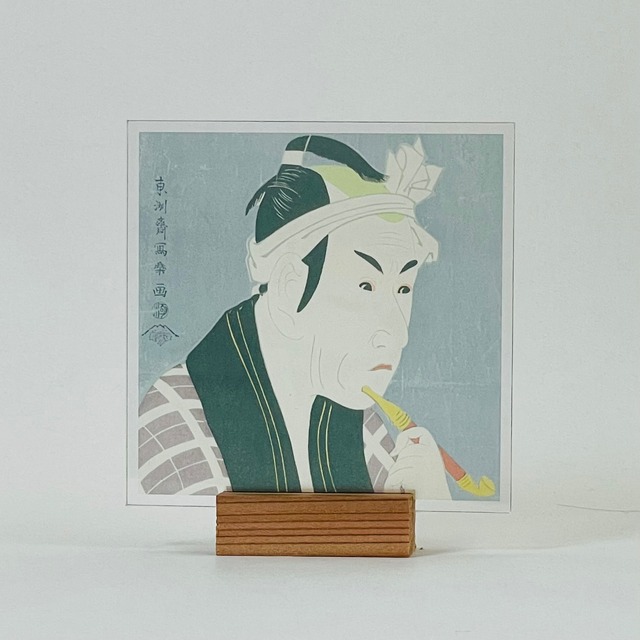
東洲斎写楽 四世松本幸四郎の山谷の肴屋五郎兵衛 / Matsumoto Koushirou IV as the Fish Seller Gorobei
JPY 1,375(USD 8.72)
【東洲斎写楽】 寛政6年(1794年)からのわずか10ヶ月間に約140点の作品を残し、忽然と姿を消した浮世絵界最大のミステリー。役者を単に美しく描く当時の常識を覆し、誇張された表情やポーズによって、その役柄の「本質」を抉り出すような強烈なデフォルメを施しました。そのあまりに鋭い写実性は、当時の役者や観客を驚愕させました。 【四世松本幸四郎の山谷の肴屋五郎兵衛】 寛政6年5月、河原崎座で上演された『恋女房染手綱(こいにょうぼうそめてづな)』に登場する肴屋五郎兵衛を描いた大首絵です。 四世松本幸四郎は、当時「鼻の幸四郎」と呼ばれるほど大きな鼻が特徴的でしたが、写楽はその特徴をあえて強調しつつ、そこに江戸の職人・町人としての「男の意地」を封じ込めました。 太い眉を寄せ、口を一文字に結んだ表情からは、困難に立ち向かう力強さと、正義感の強さが伝わってきます。また、その独特な鼻のラインが、顔立ちに力強い個性を与え、観る者に強い印象を残します。背景の「黒雲母摺(くろきらすり)」が、幸四郎の白い顔と意志の強さをより鮮明に、格調高く浮かび上がらせています。 [Toshusai Sharaku] An enigmatic genius who left the most profound impact in Ukiyo-e history. Sharaku's technique of depicting actors with stark realism?sometimes exaggerating their physical flaws?initially bewildered the Edo public. Today, it is revered as the ultimate expression for unmasking the raw humanity and inner passion of the performers. [Matsumoto Koshiro IV as the Fish Seller Gorobei] This "Okubi-e" depicts the actor Matsumoto Koshiro IV in the role of the fish seller Gorobei from the play "Koi Nyobo Some-wakage," performed in May 1794. Koshiro IV was famous for his prominent nose, earnng him the nickname "Nose Koshiro." Sharaku boldly emphasizes this feature while infusing the portrait with the "Edokko" spirit?a mix of grit, pride, and streetwise charm. The furrowed brow and firmly set mouth convey a sense of justice and unwavering resolve. The dark mica background (Kuro-kira) provides a sophisticated contrast, highlighting the actor's strong profile and the dignity of the character. It is a masterpiece that finds heroic beauty within a distinctively realistic portrayal. #東洲斎写楽 #松本幸四郎 #肴屋五郎兵衛 #浮世絵 #役者絵 #大首絵 #江戸時代 #黒雲母摺 #江戸っ子 #伝統美 #ToshusaiSharaku #Ukiyoe #JapaneseArt #Kabuki #EdoPeriod #EdoSpirit #CulturalHeritage #MuseumQuality
-

東洲斎写楽 三世沢村宗十郎の大岸蔵人 / Sawatari Sojurou III as Ohgishi Kurando
JPY 1,375(USD 8.72)
【東洲斎写楽】 寛政6年(1794年)からのわずか10ヶ月間に約140点の作品を残し、忽然と姿を消した浮世絵界最大のミステリー。役者を単に美しく描く当時の常識を覆し、誇張された表情やポーズによって、その役柄の「本質」を抉り出すような強烈なデフォルメを施しました。そのあまりに鋭い写実性は、当時の役者や観客を驚愕させました。 【三世沢村宗十郎の大岸蔵人】 寛政6年5月、都座で上演された『花菖蒲文禄曽我(はなしょうぶぶんろくそが)』に登場する大岸蔵人を描いた大首絵です。 三世沢村宗十郎は、理知的で気品のある演技で人気を博した当時の名優。本作においても、写楽はその「気高さ」を見事に捉えています。軽く閉じた口元、思慮深さを湛えた穏やかな眼差し、そして扇を手にする優雅な所作。写楽特有の強烈なデフォルメを抑え、武士としての矜持と、静かな決意を感じさせる端正な一図に仕上げています。 背景に施された「黒雲母摺(くろきらすり)」が、宗十郎の白い顔立ちを格調高く浮かび上がらせ、画面全体に重厚な静寂と、深い余韻をもたらしています。 [Toshusai Sharaku] An enigmatic genius of the Edo period who redefined Ukiyo-e in just ten months. By boldly exaggerating the facial features and psychological states of Kabuki actors, Sharaku moved beyond mere likeness to capture the very soul of the performance, leaving a legacy that continues to fascinate the world. [Sawamura Sojuro III as Ogishi Kurando] This "Okubi-e" portrays the popular actor Sawamura Sojuro III in the role of the dignified samurai Ogishi Kurando, performed in May 1794. Sojuro was renowned for his refined and intellectual acting style, which Sharaku captures here with exceptional grace. Unlike his more grotesque portrayals of villains, Sharaku depicts the actor with a calm, thoughtful gaze and an elegant posture holding a fan. The print radiates the quiet strength and pride of a high-ranking samurai. The dark mica background (Kuro-kira) creates a sophisticated contrast, making the actor’s serene expression stand out with a sense of gravity and timeless beauty. #東洲斎写楽 #沢村宗十郎 #大岸蔵人 #浮世絵 #役者絵 #大首絵 #江戸時代 #黒雲母摺 #武士道 #伝統美 #ToshusaiSharaku #Ukiyoe #JapaneseArt #Kabuki #EdoPeriod #SamuraiSpirit #CulturalHeritage #MuseumQuality
-

東洲斎写楽 谷村虎蔵の鷲塚八平次 / Tanimura Torazo as Washizuka Happeiji
JPY 1,375(USD 8.72)
【東洲斎写楽】 寛政6年(1794年)からのわずか10ヶ月間に約140点の作品を残し、忽然と姿を消した浮世絵界最大のミステリー。役者を単に美しく描く当時の常識を覆し、誇張された表情やポーズによって、その役柄の「本質」を抉り出すような強烈なデフォルメを施しました。そのあまりに鋭い写実性は、当時の役者や観客を驚愕させました。 【谷村虎蔵の鷲塚八平次】 寛政6年5月、河原崎座で上演された『恋女房染手綱(こいにょうぼうそめてづな)』に登場する敵役、鷲塚八平次を演じる谷村虎蔵を描いた大首絵です。 本作の白眉は、敵役らしい「執念」と「狡猾さ」が同居した表情にあります。細く吊り上がった眉、見開かれた鋭い眼差し、そして固く結ばれた口元。写楽は、役者が舞台上で放つ「悪の華」を一切の妥協なく描き出しました。 背景の「黒雲母摺(くろきらすり)」による深い闇のような輝きが、役者の存在感を立体的に浮かび上がらせ、画面全体に張り詰めた緊張感を与えています。時代を超えて観る者を射抜くような、写楽の圧倒的な眼力が宿った傑作です。 [Toshusai Sharaku] The most enigmatic figure in Ukiyo-e history, Sharaku produced approximately 140 prints in a mere ten months starting in 1794 before vanishing completely. He revolutionized actor portraits by rejecting idealization, instead using bold exaggeration to capture the psychological intensity and true character of the performers. His work was often considered too realistic or even satirical for the tastes of his time, yet it remains some of the most powerful portraiture in world art. [Tanimura Torazo as Washizuka Happeiji] This "Okubi-e" portrays the actor Tanimura Torazo as the villain Washizuka Happeiji in the play "Koi Nyobo Some-wakage," performed in May 1794. The print is celebrated for its raw depiction of the character's malevolence and cunning. With sharply arched eyebrows, piercing eyes, and a tightly set mouth, Sharaku captures the "evil brilliance" of the antagonist. The use of a dark mica background (Kuro-kira) creates a dramatic depth, making the actor’s powerful expression pop from the shadows. Sharaku's ability to strip away the mask of the performer to reveal the soul of the character is captured here with breathtaking intensity. #東洲斎写楽 #谷村虎蔵 #鷲塚八平次 #浮世絵 #役者絵 #大首絵 #江戸時代 #黒雲母摺 #真実の美 #江戸文化 #ToshusaiSharaku #Ukiyoe #JapaneseArt #Kabuki #EdoPeriod #DramaticArt #CulturalHeritage #MuseumQuality