-

喜多川歌麿 木挽町新やしき・小伊勢屋おちゑ / Ochie of Koiseya, Kobikich? Shin-Yashiki
JPY 1,375(USD 8.72)
【喜多川歌麿】 江戸時代、浮世絵黄金期を代表する美人画の大家。女性の顔を大きく描く「大首絵(おおくびえ)」の技法を確立し、単なる外見の美醜のみならず、その奥底に潜む感情や心理状態までも鋭く描き出しました。 【木挽町新やしき・小伊勢屋おちゑ】 木挽町(現在の銀座周辺)にあった茶屋「小伊勢屋」の看板娘、おちゑを描いた大首絵です。彼女は「江戸の三美人」の一人に数えられるほど高い人気を誇り、彼女を一目見ようと店には多くの客が詰めかけました。 本作で歌麿は、おちゑの透き通るような白い肌と、まだ幼さを残しながらも気品に満ちた顔立ちを、流麗な細線で完璧に表現しています。左手で着物の袂(たもと)を軽く持ち上げるしなやかな所作、そして結い上げられた髪の緻密な描写は、歌麿の卓越した技量の証です。 背景に施された「雲母摺(きらすり)」が、彼女の存在を特別な光の中に浮かび上がらせ、江戸の町娘としての瑞々しい美しさを神々しいまでに引き立てています。実在のスターを鮮やかに記録した、江戸のファッション・グラビアの最高峰です。 [Kitagawa Utamaro] The leading master of "Bijin-ga" (paintings of beautiful women) during the golden age of Ukiyo-e. He excelled at capturing not just feminine beauty but also the latest trends and celebrities of Edo, famously portraying real-life teahouse waitresses who became the city's icons. [Ochie of Koiseya, Kobikicho Shin-Yashiki] This "Okubi-e" (large-head portrait) depicts Ochie, a famous waitress from the teahouse "Koiseya" in the Kobikicho district (present-day Ginza). She was celebrated as one of the "Three Beauties of Edo," drawing vast crowds of admirers. Utamaro captures her youthful yet dignified face and translucent skin with his signature delicate lines. Her graceful posture, as she lifts her sleeve, and the intricate detail of her coiffure demonstrate Utamaro's unparalleled craftsmanship. The shimmering mica background (Kira-suri) elevates her presence, making the charming town girl appear almost divine. This work stands as a premier example of Edo-era celebrity portraiture, blending realistic features with idealized elegance. #喜多川歌麿 #小伊勢屋おちゑ #浮世絵 #美人画 #大首絵 #江戸時代 #江戸の三美人 #雲母摺 #看板娘 #伝統美 #KitagawaUtamaro #Ukiyoe #JapaneseArt #Bijinga #EdoPeriod #CelebrityPortrait #CulturalHeritage #MuseumQuality
-

喜多川歌麿 婦人相学拾躰・髪洗い / Ten Physiognomies of Women: Washing Hair
JPY 1,375(USD 8.72)
【喜多川歌麿】 江戸時代、浮世絵黄金期を代表する美人画の大家。女性の顔を大きく描く「大首絵(おおくびえ)」の技法を確立し、単なる外見の美醜のみならず、その奥底に潜む感情や心理状態までも鋭く描き出しました。 【婦人相学拾躰・髪洗い】 女性の様々な性質や状態を十の型で描き分けた「婦人相学拾躰」シリーズの一図です。 本作は、結った髪を解き、盥(たらい)の前に屈んで髪を洗う女性の姿を捉えています。豊かな黒髪が水に濡れ、肩から背中へと流れるライン。その重なり合う髪の一本一本までが、歌麿の流麗な線によって緻密に表現されています。 襟足を大きく見せ、着物を寛がせた姿には、当時の浮世絵が求めた「生活の中の色香」が漂います。しかし、それは決して下品なものではなく、日常の清潔な美しさとして昇華されています。背景の「雲母摺(きらすり)」が、水しぶきの清涼感と女性の白い肌の質感をよりいっそう際立たせ、静かな水の音までもが聞こえてきそうな臨場感を生んでいます。 [Kitagawa Utamaro] The leading master of "Bijin-ga" (paintings of beautiful women) during the golden age of Ukiyo-e. He specialized in "Okubi-e" (large-head portraits), using his delicate brushwork to vividly capture both the inner emotions and the fleeting moments of beauty found in the daily lives of women. [Ten Physiognomies of Women: Washing Hair (Fujin Sogaku Juttai: Kami-arai)] This print is part of the "Ten Physiognomies of Women" series, which explores various feminine characters and states. It depicts a woman crouched before a washbowl, having unpinned her hair to wash it. The flow of her abundant black hair, wet and cascading over her shoulders and back, is rendered with incredible precision through Utamaro’s fluid lines. The depiction of her exposed neck and loosely worn kimono evokes the "sensuality of daily life" highly prized in Ukiyo-e, yet it remains refined and celebrates a moment of pure, domestic beauty. The shimmering mica background (Kira-suri) enhances the cool sensation of the water and the translucency of her skin, creating an atmosphere so vivid one can almost hear the gentle splashing of water. #喜多川歌麿 #髪洗い #浮世絵 #美人画 #大首絵 #江戸時代 #雲母摺 #江戸の生活 #黒髪 #伝統美 #KitagawaUtamaro #Ukiyoe #JapaneseArt #Bijinga #EdoPeriod #DailyLife #CulturalHeritage #MuseumQuality
-
喜多川歌麿 歌撰恋之部・深く忍恋 / Anthology of Love: Deeply Hidden Love
JPY 1,375(USD 8.72)
【喜多川歌麿】 江戸時代、浮世絵黄金期を代表する美人画の大家。女性の顔を大きく描く「大首絵(おおくびえ)」の技法を確立し、単なる外見の美醜のみならず、その奥底に潜む感情や心理状態までも鋭く描き出しました。 【歌撰恋之部・深く忍恋】 「歌撰恋之部」シリーズ全五図の中でも、特に心理描写が秀逸とされる作品です。「深く忍恋」の題が示す通り、誰にも知られてはならない、しかし抑えきれないほど深く激しい恋心を抱く女性の姿を捉えています。 女性は袖を口元に当て、周囲を気にするような、あるいは自らの感情を押し殺そうとするかのような仕草を見せています。細く描かれた眉と、わずかに見開かれた瞳。その表情からは、忍ぶ恋ゆえの危うさと、凛とした緊張感が伝わってきます。 背景の「雲母摺(きらすり)」が、張り詰めた空気感と女性の白い肌の質感を際立たせ、観る者を江戸の静かな「忍ぶ恋」の世界へと引き込みます。歌麿の鋭い感性が、目に見えない「恋の重み」を視覚化した、浮世絵史上の金字塔です。 [Kitagawa Utamaro] The preeminent master of "Bijin-ga" (paintings of beautiful women) during the golden age of Ukiyo-e. He specialized in "Okubi-e" (large-head portraits), focusing on the emotional depth and psychological nuances of his subjects rather than just their physical appearance. [Anthology of Love: Deeply Hidden Love (Kasen Koi no Bu: Fukaku Shinobu Koi)] This print is considered one of the finest psychological portraits in Utamaro's "Anthology of Love" series. As the title "Deeply Hidden Love" suggests, it portrays a woman harboring a love that must remain secret. She is depicted bringing her sleeve to her mouth, a gesture that conveys her struggle to suppress her overflowing emotions while remaining wary of others' gazes. Her slender brows and wide, intense eyes reveal the delicate tension and the weight of her hidden passion. The shimmering mica background (Kira-suri) emphasizes the taut atmosphere and the elegance of her form, effectively visualizing the internal drama of a secret romance. It is a monumental achievement in Ukiyo-e for its ability to depict the invisible complexities of the human heart. #喜多川歌麿 #歌撰恋之部 #深く忍恋 #浮世絵 #美人画 #大首絵 #江戸時代 #雲母摺 #恋 #心理描写 #KitagawaUtamaro #Ukiyoe #JapaneseArt #Bijinga #EdoPeriod #SecretLove #CulturalHeritage #MuseumQuality
-

喜多川歌麿 婦女人相十品・ポッピンを吹く女 / Woman Blowing a Glass Toy (Poppin)
JPY 1,375(USD 8.72)
【喜多川歌麿】 江戸時代、浮世絵黄金期を代表する美人画の大家。女性の顔を大きく描く「大首絵(おおくびえ)」の技法を確立し、単なる外見の美醜のみならず、その奥底に潜む感情や心理状態までも鋭く描き出しました。 【ポッピンを吹く女】 歌麿の代名詞とも言える本作は、シリーズ「婦女人相十品(ふじんにんそうじゅっぴん)」のうちの一図です。当時流行した「ポッピン(ポペン)」と呼ばれるガラス製の玩具を口にくわえ、その音を楽しんでいる若い女性が描かれています。 注目すべきは、女性の若々しさを象徴するディテールの数々です。市松模様の振り袖に、まだ幼さを残す愛らしい表情。ガラスの繊細な透明感と、それを吹く瞬間の頬のわずかな動きまでが、流麗な線描によって表現されています。 背景には、高級感溢れる「雲母摺(きらすり)」が施され、銀色の輝きが彼女の白い肌をより瑞々しく引き立てています。江戸の平和な日常に流れる、軽快で弾けるような音までが聞こえてきそうな、時代を超えて愛されるポップな名作です。 [Kitagawa Utamaro] The preeminent master of "Bijin-ga" (paintings of beautiful women) during the golden age of Ukiyo-e. He specialized in "Okubi-e" (large-head portraits), capturing the fashion, personality, and fleeting moments of women in Edo with unparalleled elegance and precision. [Woman Blowing a Glass Toy (Popen) / Fujo Ninso Juppin: Popen o fuku onna] This iconic work is perhaps Utamaro's most famous masterpiece. It depicts a fashionable young woman blowing into a "Popen," a delicate glass toy that makes a popping sound when air is blown into it. The print is a brilliant showcase of Edo-era youth and "Iki" (chic aesthetics). Her checkered kimono and innocent, lively expression reflect the carefree spirit of a daughter from a wealthy family. The shimmering mica background (Kira-suri) highlights her radiant skin, while the fine lines capture the fragile transparency of the glass toy. This work perfectly encapsulates a moment of playful delight, standing as a timeless symbol of Japanese pop culture from the Edo period. #喜多川歌麿 #ポッピンを吹く女 #浮世絵 #美人画 #大首絵 #江戸時代 #雲母摺 #江戸の粋 #伝統工芸 #ポペン #KitagawaUtamaro #Ukiyoe #JapaneseArt #Bijinga #EdoCulture #PopCulture #CulturalHeritage #MuseumQuality
-

喜多川歌麿 教訓親の目鑑・不作者 / Lesson of a Parent's Eye: The Lazy One
JPY 1,375(USD 8.72)
SOLD OUT
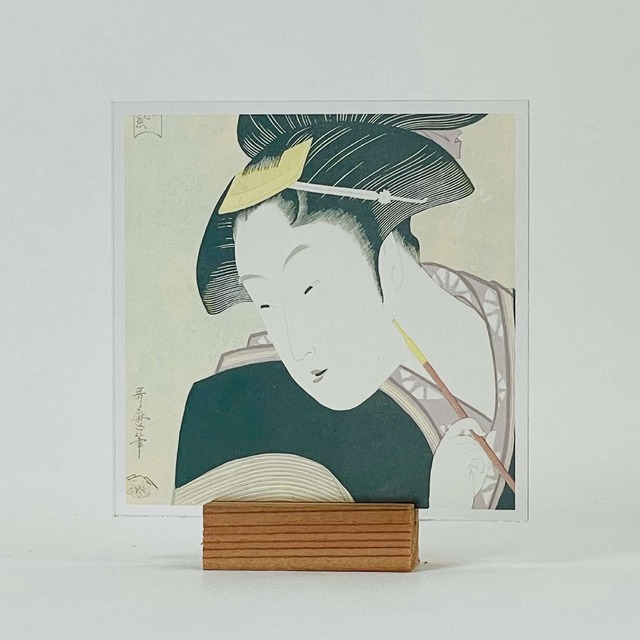
【喜多川歌麿】 江戸時代、浮世絵黄金期を代表する美人画の大家。女性の顔を大きく描く「大首絵(おおくびえ)」の技法を確立し、単なる外見の美醜のみならず、その奥底に潜む感情や心理状態までも鋭く描き出しました。 【教訓親の目鑑・不作者】 「親の目から見た教訓」というコンセプトで、様々なタイプの娘たちを描いたシリーズの一図です。「不作者(ふさくしゃ)」とは、現代で言えば「怠け者」や「だらしない人」を指します。 画面には、寝ぼけ眼で欠伸(あくび)をし、乱れた髪をそのままに、片肌を脱いで寛ぎすぎる娘の姿が描かれています。右手で火吹き竹を弄びながら、家事もせずにぼんやりとしている様子は、当時の江戸の日常風景を活写しています。 歌麿はあえて「美しく整った姿」ではなく、こうした「隙のある姿」を描くことで、人間本来の愛嬌や、飾らない生活感を浮き彫りにしました。親が眉をひそめつつも、どこか放っておけない娘への慈しみが、レンズ(目鑑)越しに伝わってくるような、温かみのある風俗画です。 [Kitagawa Utamaro] The preeminent master of "Bijin-ga" (paintings of beautiful women) during the golden age of Ukiyo-e. While famous for idealized beauty, in his later years, he produced series that categorized human character and daily habits with a sharp, observant eye for realism. [Lesson of a Parent's Eye: The Lazy One (Kyokun Oya no Megane: Fusakusha)] This print is part of a series that depicts various types of young women through the metaphorical "lens" of a parent's judgment. "Fusakusha" refers to a lazy or untidy person. The image captures a young woman in a state of utter relaxation?yawning with sleepy eyes, her hair disheveled, and her kimono casually falling off one shoulder. She idly fidgets with a bamboo blowpipe (hifukidake) used for stoking fires, clearly neglecting her household chores. By choosing to depict such an "imperfect" moment rather than an idealized pose, Utamaro highlights the raw, unvarnished charm of everyday life. It is a humorous and relatable work that reflects a parent’s exasperation mixed with an underlying affection for their flawed daughter. #喜多川歌麿 #教訓親の目鑑 #不作者 #浮世絵 #風俗画 #大首絵 #江戸時代 #江戸の生活 #人間味 #教訓 #KitagawaUtamaro #Ukiyoe #JapaneseArt #EdoPeriod #DailyLife #Satire #CulturalHeritage #MuseumQuality
-

喜多川歌麿 歌撰恋之部・物思恋 / Anthology of Love: Thoughtful Love
JPY 1,375(USD 8.72)
【喜多川歌麿】 江戸時代、浮世絵黄金期を代表する美人画の大家。女性の顔を大きく描く「大首絵(おおくびえ)」の技法を確立し、単なる外見の美醜のみならず、その奥底に潜む感情や心理状態までも鋭く描き出しました。 【歌撰恋之部・物思恋】 五枚からなる「歌撰恋之部」シリーズのなかでも、最も評価の高い一図です。「物思恋(ものおもうこい)」の題が示す通り、人知れず募る恋心に胸を痛め、物思いに耽る女性の刹那を切り取っています。 眉を寄せ、顎に手を当てて一点を見つめる眼差し。その表情からは、言葉にできない憂いと、内側に燃える激しい情念が静かに伝わってきます。背景には豪華な「雲母摺(きらすり)」が施され、その銀色の輝きが、女性の白い肌と黒髪、そして複雑な恋の心理を神々しいまでに際立たせています。 歌麿は、この一図において「恋という病」を視覚化することに成功しました。浮世絵史上に残る、心理描写の極致とも言える傑作です。 [Kitagawa Utamaro] The preeminent master of "Bijin-ga" (paintings of beautiful women) during the golden age of Ukiyo-e. He specialized in "Okubi-e" (large-head portraits), focusing on the emotional depth and psychological nuances of his subjects rather than just their physical appearance. [Anthology of Love: Thoughtful Love (Kasen Koi no Bu: Mono-omou Koi)] Regarded as one of Utamaro's absolute masterpieces, this print is part of the "Anthology of Love" series. It depicts a woman lost in deep contemplation over a secret, perhaps unrequited, love. Her furrowed brow and the way she rests her chin on her hand perfectly convey a sense of melancholy and inner longing. The background features a lavish mica-dust finish (Kira-suri), creating a shimmering effect that highlights the woman’s porcelain skin and intricate expression. Utamaro successfully visualizes the "invisible" ache of love, making this one of the most sophisticated examples of psychological portraiture in the history of Ukiyo-e. #喜多川歌麿 #歌撰恋之部 #物思恋 #浮世絵 #美人画 #大首絵 #江戸時代 #雲母摺 #恋 #心理描写 #KitagawaUtamaro #Ukiyoe #JapaneseArt #Bijinga #EdoPeriod #RomanticLove #CulturalHeritage #MuseumQuality
-

喜多川歌麿 婦女人相十品・浮気之相 / Ten Types of Female Physiognomy: The Unfaithful Type
JPY 1,375(USD 8.72)
【喜多川歌麿】 江戸時代、浮世絵黄金期を代表する美人画の大家。女性の顔を大きく描く「大首絵(おおくびえ)」の技法を確立し、単なる外見の美醜のみならず、その奥底に潜む感情や心理状態までも鋭く描き出しました。 【婦女人相十品・浮気之相】 本作は、喜多川歌麿の代表的なシリーズ『婦人相学十体』の中でも、特に名高い傑作の一つです。「相学(にんそうがく)」とは、顔立ちからその人の性格や運命を読み解く術を指します。タイトルの「浮気」という言葉は、現代的な意味での不貞行為を指すものではなく、心が移ろいやすく軽薄であることや、情に流されやすい色気のある気質を表しています。 描かれている女性は湯上がり姿で、市松模様のゆったりとした浴衣を無造作に羽織り、右手で襟元を押さえながら、左肩には手ぬぐいを掛けています。少し乱れた髪や、のぞく首筋と胸元が、湯上がり特有の気だるげな色香を漂わせています。歌麿は、彼女の眼差しに宿るどこか上の空のような雰囲気や奔放な気配を見事に捉え、捉えどころなく揺れ動く心の機微を一枚の絵の中に定着させました。こうした人物の気質や官能性に対する深い洞察こそが、本作を「美人画」というジャンルにおける最高傑作の一つへと高めているのです。 [Kitagawa Utamaro] The preeminent master of "Bijin-ga" during the golden age of Ukiyo-e. He revolutionized the genre with "Okubi-e" (large-head portraits), moving beyond mere physical depiction to capture the inner psyche and subtle emotions of his subjects. [Ten Types of Female Physiognomy: The Unfaithful Type (Fujo Ninso Juppin: Uwaki no So)] This masterpiece is one of Utamaro's most ambitious works, aiming to categorize female characters through their facial features. In the Edo period, "Uwaki" referred to a flighty, restless, or sensual nature rather than modern infidelity. The woman is depicted in a state of post-bath dishabille, draped loosely in a checkered yukata. Her slightly disheveled hair and the casual way she holds her robe evoke a sense of raw, uninhibited sensuality. Utamaro masterfully captures her wandering gaze and restless spirit, transforming a study of "physiognomy" into a profound exploration of human desire and personality. #喜多川歌麿 #浮世繪 #美人畫 #江?時代 #大首繪 #人相 #浮氣之相 #日本畫 #傳統美 #感官美 #KitagawaUtamaro #Ukiyoe #JapaneseArt #Bijinga #EdoPeriod #Physiognomy #CulturalHeritage #MuseumQuality
-

喜多川歌麿 婦人手業操鏡・洗濯 / Women's Handy Work: Laundry
JPY 1,375(USD 8.72)
【喜多川歌麿】 江戸時代、浮世絵黄金期を代表する美人画の大家。女性の顔を大きく描く「大首絵(おおくびえ)」を創始し、外面的な美しさだけでなく、その内面に潜む感情や機微までも描き出しました。繊細な線描と柔らかな色彩により、江戸の女性たちの憧れの的となった絵師です。 【婦人手業操鏡・洗濯】 女性の日常的な家事の姿を、鏡を通した視点で描く「婦人手業操鏡(ふじんてわざあやつりかがみ)」シリーズの一図です。 本作では、洗濯に勤しむ二人の女性が描かれています。一人は盥(たらい)の前に座り込み、もう一人は洗い上げた布を力強く絞る。注目すべきは、労働の最中であっても失われない女性たちの「艶やかさ」です。腕を捲り上げ、胸元がわずかに着崩れた姿は、生活感の中に江戸特有の健康的な色香を漂わせています。 歌麿は、単なる風俗画としてではなく、布の質感や水の動き、そして働く女性のしなやかな肢体を、洗練された構図の中に封じ込めました。日常の何気ない「手仕事」を芸術の域へと高めた、歌麿の鋭い観察眼が光る名作です。 [Kitagawa Utamaro] The preeminent master of "Bijin-ga" (paintings of beautiful women) during the golden age of Ukiyo-e in the Edo period. He revolutionized the genre by creating "Okubi-e" (large-head portraits), capturing not just physical beauty but the subtle emotions and personalities of his subjects with delicate lines and soft colors. [Women's Handy Work: Laundry (Fujin Te-waza Ayatsuri Kagami: Sentaku)] This print is part of a series titled "A Mirror of Women's Handy Work," which captures women engaged in various daily chores. This specific scene depicts two women focused on their laundry—one scrubbing at a washbowl and the other vigorously wringing out a cloth. Utamaro masterfully portrays the vitality and healthy sensuality of these working-class women; their rolled-up sleeves and slightly loosened robes reveal a realistic yet elegant glimpse into Edo life. By focusing on the rhythmic movements of their bodies and the textures of the fabric, Utamaro transforms a mundane household task into a sophisticated work of art, celebrating the inherent grace found in everyday labor. #喜多川歌麿 #浮世絵 #美人画 #江戸時代 #風俗画 #洗濯 #手仕事 #伝統美 #日本画 #江戸文化 #KitagawaUtamaro #Ukiyoe #JapaneseArt #Bijinga #EdoPeriod #HandyWork #CulturalHeritage #MuseumQuality